
Surf Fishing the Outer Banks
Oct 10, 2008 I Blind Fishing Adventures, Fishing Gear and Techniques.Along the east coast of North Carolina there are a series of islands that have been linked with bridges to form what are now known as the Outer Banks. These islands represent the most eastern point of the United States and, consequently, experience the worst weather the Atlantic Ocean can generate. Between weather systems, the beaches and dunes that border these islands are unspoiled and largely undeveloped, making them a nature lover’s paradise. They also offer some of the best surf fishing on the east coast of North America.
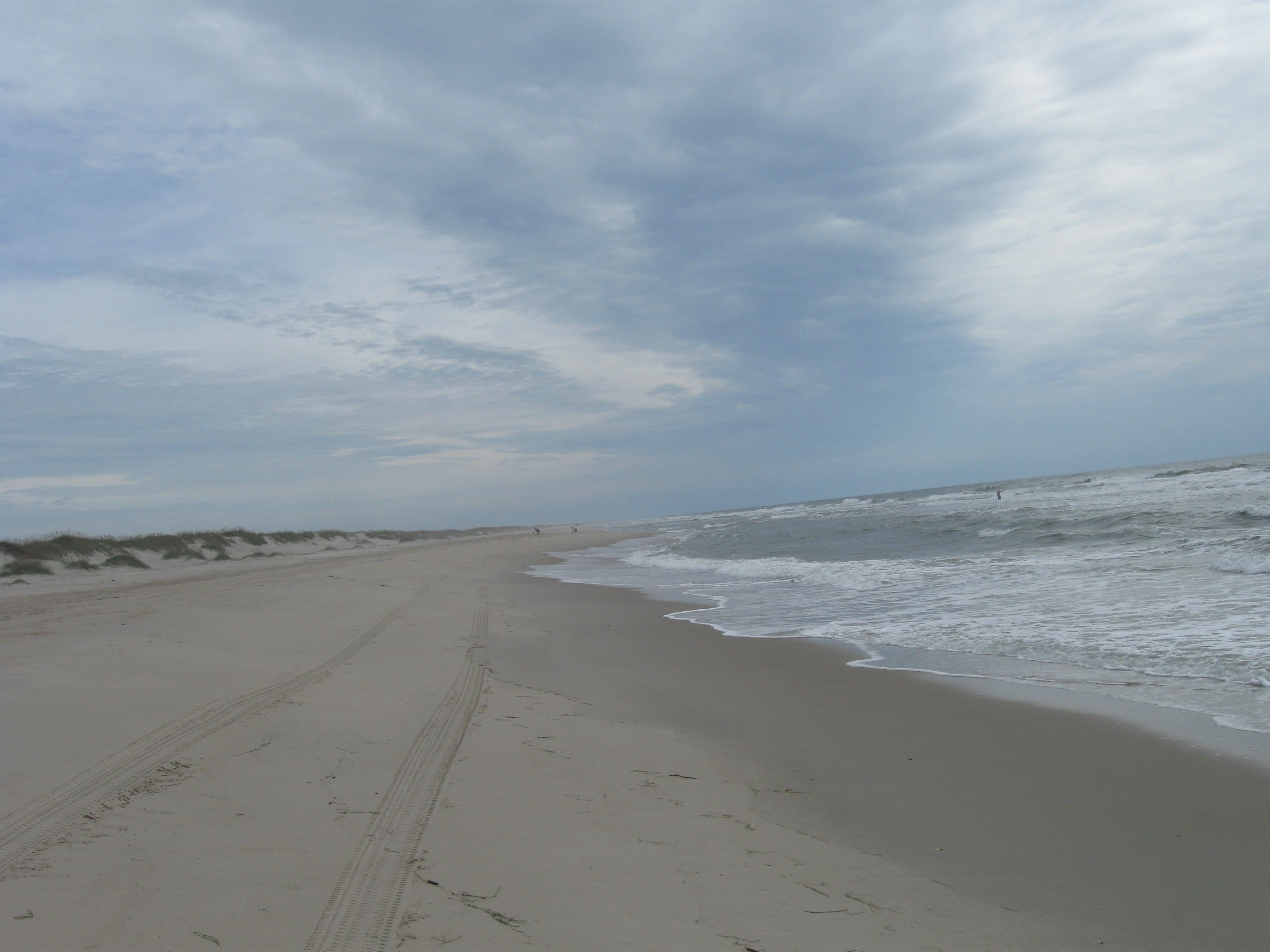
From October 8 to 12, 2008, I explored the Outer Banks with my family; camping along the way in our travel trailer. From Nags Head in the north to Okricoke Island in the south, with stops at Rodanthe and the Oregon Inlet, we were enthralled with the beauty of the surroundings.
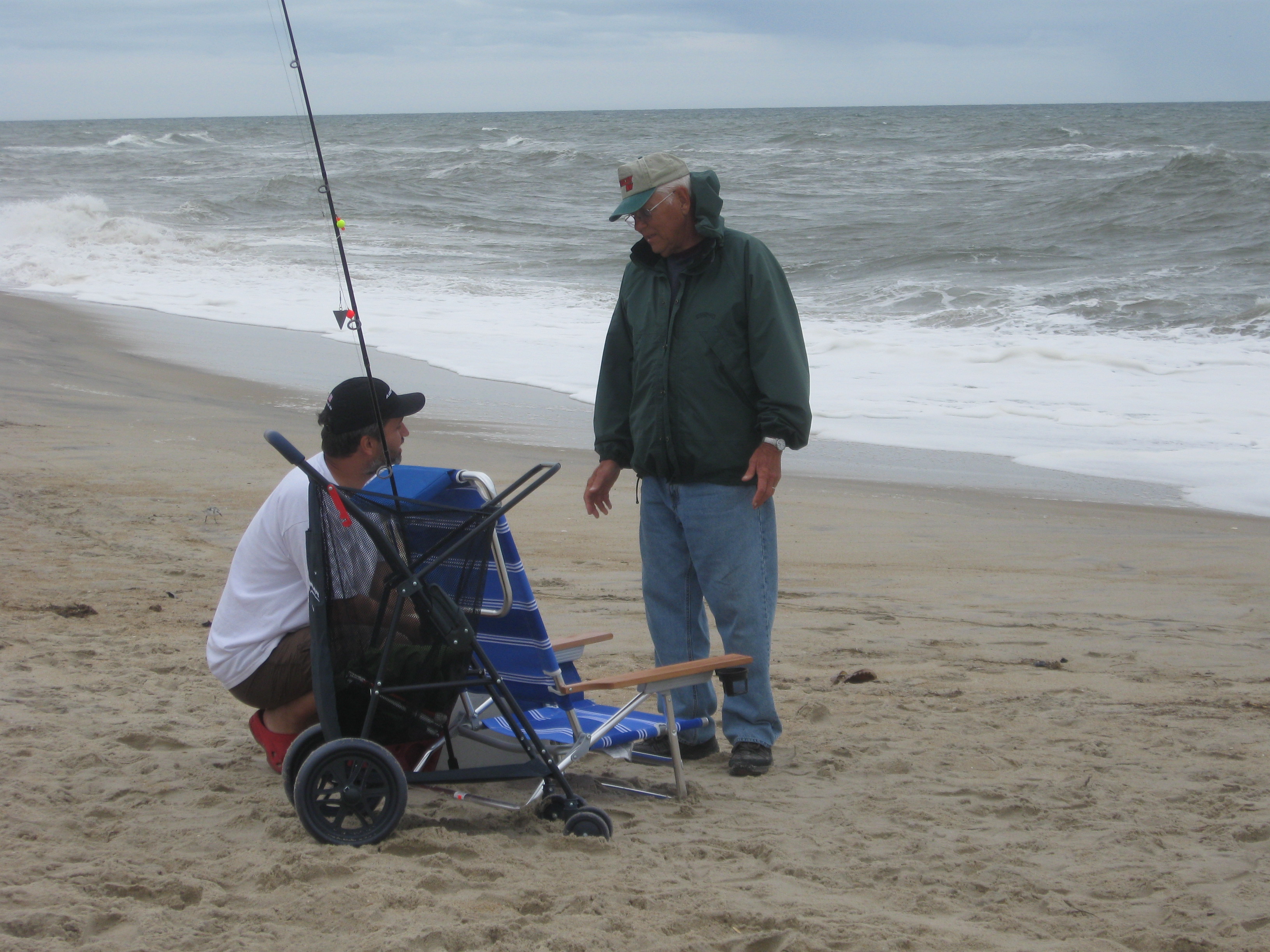
Not owning any surf fishing gear, I elected instead to take with me one of my lighter action Carp fishing rods (medium action 12’ capable of throwing up to 4 oz’s in weight). With much friendly advice from other surf fishers I met along the beaches, and a few pro-longed stops in several of the numerous fishing tackle shops, it wasn’t long before I was launching my first casts into the surf.

Casting was a total body experience yet relatively simple in that I had only to walk up to the ocean until the waves were breaking around my legs, orient myself by listening to the waves crashing down from left to right, hall back the rod and with several steps forward to add momentum to my cast, let fling. No chance of hearing where my cast landed, but the tension in the line quickly determined the general location where my bait came to rest.
Most surf fishers utilize fresh bait in the form of chunks of smaller salt water fish cut and prepared right there on the beach. Using fresh bait is imperative as is changing your bait regularly as the fish are just as unlikely to eat something tattered and stale as are we. For this reason, every surf fisher carries with him/her a cooler to store their bait and a cutting board and sharp knife.
The terminal tackle generally consists of a wire or heavy mono spreader rig that has a clip for a weight at the terminal end, and two six or so inch spreaders that point out from the main lead spaced about six inches apart. Snelled hooks are then attached to the two arms. The rig is then tied to the main line by way of a swivel. Weights range from anywhere from two to 10 oz’s, and the snelled hook selection will depend largely on the species being pursued at the time.
Some surf fishers will tie on a round hook on their lower spreader arm with as much as 12 inches of snelled leader so that the hook will rest on the bottom – Flounder being bottom feeders. Longer-shank number 4 and 2 hooks are often used for the upper spreader on an eight inch snelled leader. The variety of fish that can be caught is endless; however, the time of year I was there meant Blues were most popular. Speckled Trout are also caught, but these are more often found on the western side of the islands in the sounds and channels that separate the Outer Bank islands from the main land. Large striped Bass up to 50 lb can be caught as can King Mackerel. There are all manner of more dangerous species as well such as Rays with their tails and even shark.
Some fishers elect to stand in the surf with their stocking waders, (no shoes as they just fill with sand), while others take a more relaxed approach and use beach chairs and rod holders. Those standing in the surf are usually casting crank baits and often prefer level wind reels, where the live bait fishers primarily use spinning tackle. Some go the extra mile and purchase reels specifically made for salt water fishing, and others just buy less-expensive fresh water reels and change them out every couple years. Regardless of the type of gear purchased, it all needs to be washed down with fresh water at the end of each day.

The size of weight used depends largely on the size of the waves and other current activities such as tides and rips (cross currents). I through as much as five oz’s but was forced home one day when the waves played sport with my terminal tackle and repeatedly washed it up on to the beach. I was unable to throw heavier weights to avoid the drifting as I was afraid of snapping my rod. I learned that it isn’t so much the length of the rod that counts, but its ability to throw the weights needed on any specific day, which is why most surf fishers carry more than one rod.
Losing tackle isn’t unheard of as rogue waves can easily overwhelm a fisher knocking him/her off their feet and claiming their rod and reel in the process. Tackle can also be lost through inattentiveness when a large fish takes up your bait and runs, and your rod holder isn’t securely fastened or your hold on the rod is relaxed. In all cases, the waves quickly claim what’s rightfully yours.
One of the nicest things about surf fishing is the absolute solitude it presents the fisher without sight. With the sand under foot, the wind in ones face, the sun overhead, and the sound of the waves completely blocking out all other sounds with the exception of nearby sea birds, it truly is a Zen-type fishing experience that refreshes the sole. The sensation passed through the rod of the line and tackle being lifted with each wave, and the feel of the sinker being tumbled along the bottom, was a constant source of stimulation that held my focus for considerable stretches of time. Bites are generally quite aggressive and easily transmitted to the fisher especially when using braided line. Even the smallest fish can present a decent show for themselves as they have developed strong swimming skills over their short lives due to the constant movement of the water along the shore resulting from waves and tides, and it’s this movement that attracts the fish since it’s responsible for churning up the sand and revealing their food source.
Surf fishing is also a great family activity in that there’s the beach and waves for the kids and others to explore and enjoy. Kite flying, sea shell collecting and sand castle building all seem to go hand-in-hand. Even though at one point we were trailer bound for 24 hours as a hurricane passed well to the south, the general cleansing that results each time a storm passes through the area keeps the environment seemingly refreshed and relatively undeveloped. Surf fishing the Outer Banks is a real treat and I can’t wait to get back!


Author: | Posted on 10. October 2008 at 05:20 am | Filed in Blind Fishing Adventures, Fishing Gear and Techniques | 1 Comment


Doug Smith Says:
West Coast fisherman.. mostly beach casting, jetties and piers. I have always wanted to fish the Outer Banks. Your section on Techniques got me to thinking about how a sightless fisherman might use the sound of the waves to locate deep “holding areas” in close. Having never fished the Outer Bank surf this may not apply but on the West Coast I have found deep holes within casting distance that can be spotted by a noticeable lack of wave action over them and a darker color. Some species will congregate in these deeper inshore spots. That may apply to some species along the outer banks. The local fishermen may have comments on that. If it seems promising, you may be able to learn how to locate the deeper inshore holes by the decrease of wave action sound in that area. Just a thought.
Oct 10, 2008, 12:00 am