
Ice Fishing in Canada’s Capital
Mar 12, 2012 I Blind Fishing Adventures, Feel The Bite, Fishing Tips.By Lawrence Gunther Euteneier
Photographs by Scott Campbell
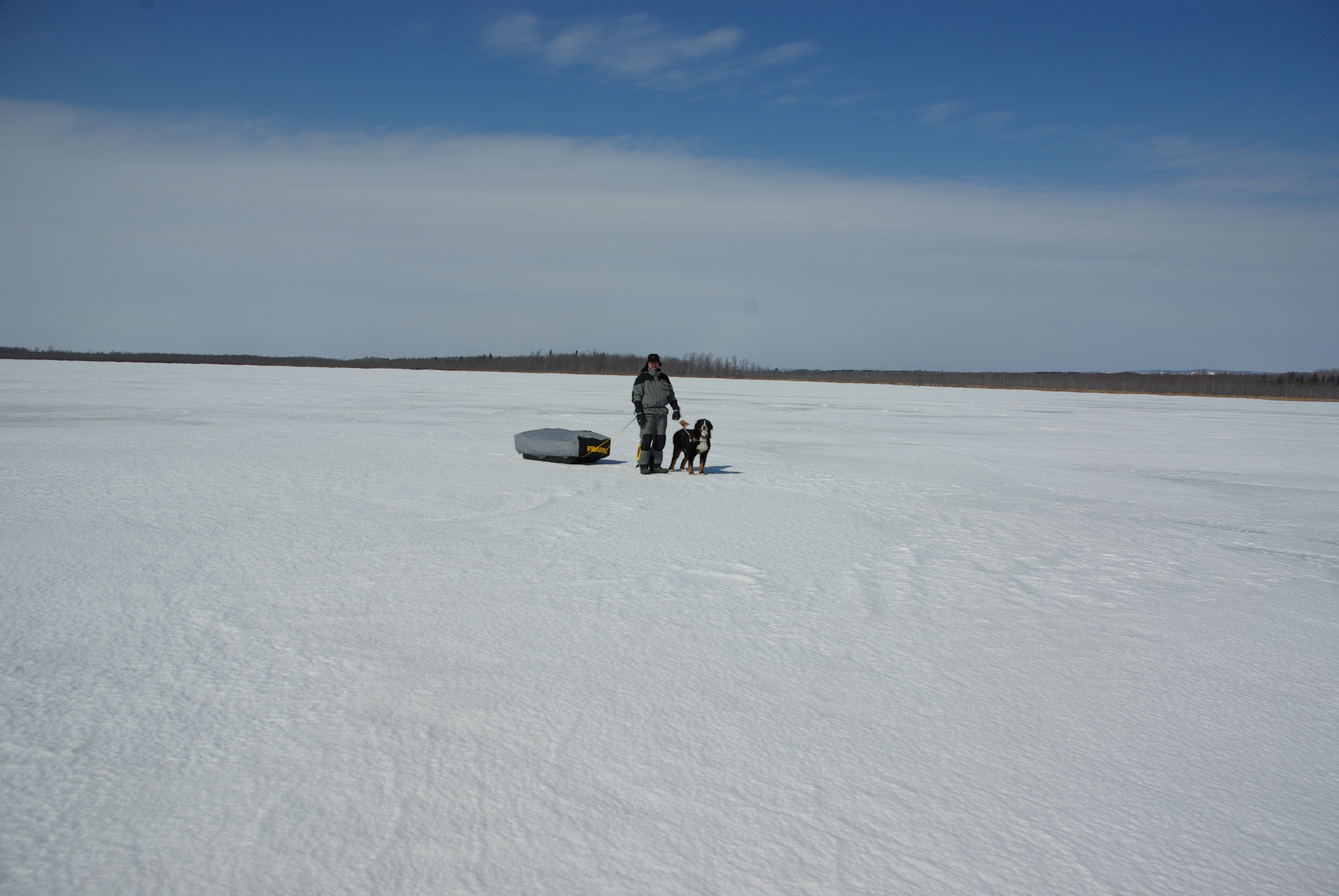
(Photo of Lawrence and Maestro heading out on the ice)
Flowing past the foot of Canada’s Parliament and 4th largest city, the Ottawa River may rank as one of Canada’s least appreciated recreational fishery. Musky, Pike, Bullhead, Carp, Large Small and White Bass, Black Crappie, Perch, Walleye and Sauger are all there waiting to be caught. What makes fishing the Ottawa even more memorable is its natural beauty.
At 1,271 km or 863 miles, the Ottawa River is the 2nd longest river in Canada to drain into the Atlantic Ocean. Its headwaters are situated deep within the province of Quebec. The river itself meanders its way west through a chain of lakes to Lake Timiskaming, before turning south and southeast where it straddles the Quebec / Ontario provincial border, eventually emptying into the mighty St. Lawrence river.
When the Queen of England selected the small logging town of Bi Town on the Ottawa’s west bank to serve as Canada’s national Capital in 1867, First Nations Peoples had already been using the site for millennia for their annual gathering of tribes. Thousands of Natives would gather to trade, exchange stories, celebrate cultural milestones, and affirm inter-tribal alliances. Entire communities would travel by canoe along rivers such as the Madawaska, Gatineau and Rideau, all of which terminate near what’s now known as Ottawa. Ceremonies by First Nations peoples are still held on Victoria Island each summer.
During the 1900’s the Ottawa River served as a key economic driver with its numerous hydro-powered industries, commercial vessels of all sizes, and conveyance of winter-felled timber. A number of commercial fisheries also thrived up until the early 1920’s, including the harvest of Musky and Sturgeon. While fishing recreationally for Sturgeon is currently prohibited, Musky fishers from across the US and Canada regard the Ottawa River as a world class fishery.
As a citizen of Ottawa going on 20 years now, it never ceases to amaze me just how fortunate I am to have access to such an amazing river. Travel east or west by boat 20 minutes and you will think you just teleported into the far north. And yet, over one-million people draw their drinking water from its flow.
Anyone who fishes the Ottawa River will attest that one never knows where the fish will be from one day to the next. But fish there are, including monster Largemouth such as a 6.92lb specimen that weighed in during the 2011 Ranger / Stratos Invitational. Unfortunately for me, it wasn’t my kicker.
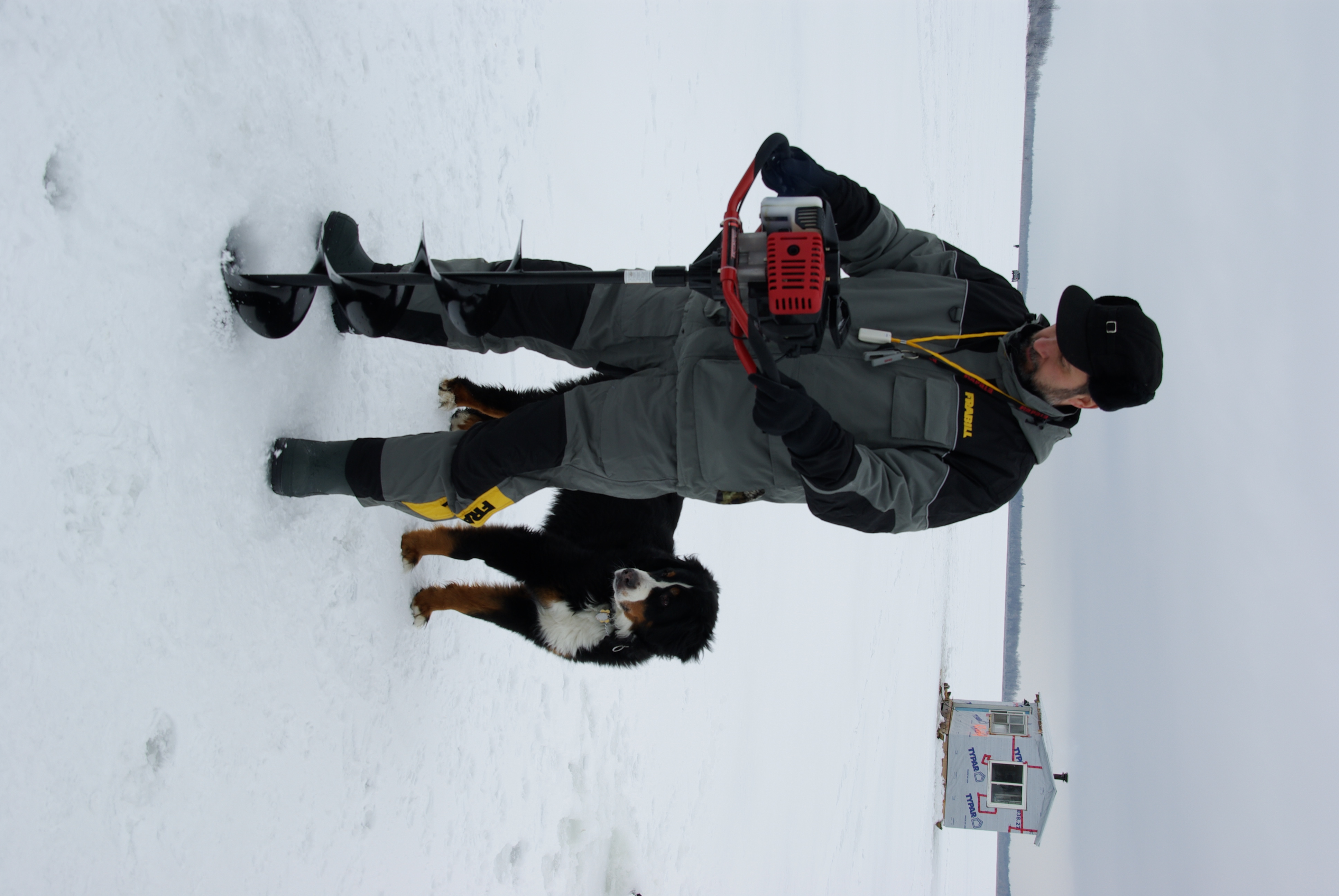
(Photo of Lawrence auguring 10” holes through the ice on the Ottawa River.)
In early January 2012 I arranged to hook up with several of my more winter-hardy fishing buddies in Rockland — just a stones throw east of Ottawa. Upon arriving at our meeting spot the river inspired little confidence in our plan to catch Walleye and Sauger through the ice with open water less than 100 feet from shore. Fortunately, our actual destination, a bay just five minutes east, had over 12” of solid ice. Not quite enough to drive out with vehicles, but plenty for a snowmobile and portable shelters. Even still, each of us were carrying hand picks for self-extraction just in case. Anyone who has spent considerable time ice fishing knows there’s no such thing as “safe ice”.
With a Navionics map plugged into my Lowrance Elite 5 Ice Machine, we had little difficulty punching a series of 10” holes over and around a targeted shoal that offered depths ranging from 8’ to 32’. Employing a power auger like Rapala’s new light-weight “Black Ice” made quick work of what once would have taken considerable time and effort.
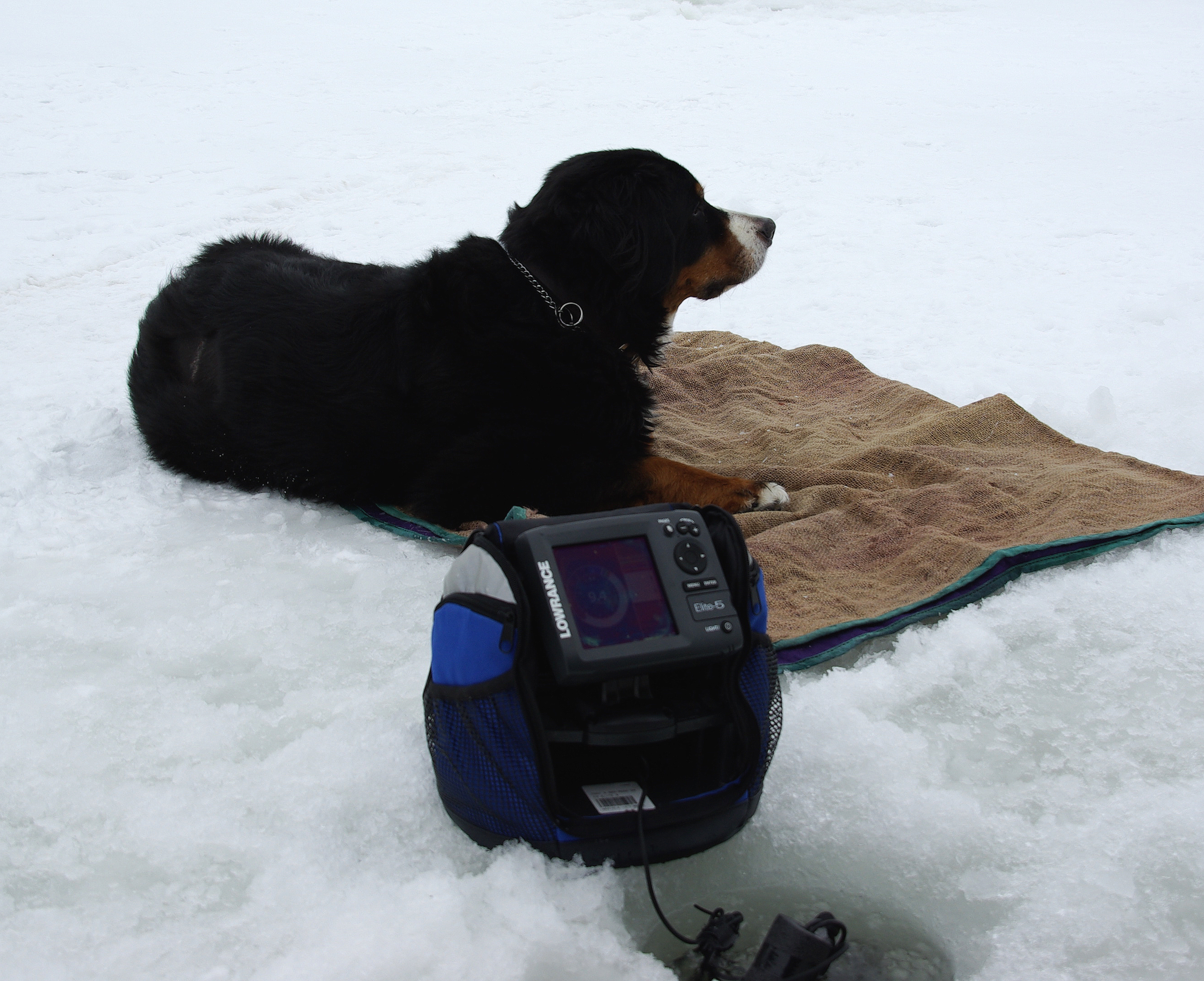
(Photo of Maestro and Lowrance’s new Elite 5 Ice Machine.)
Despite our being tucked in just off an island near the mouth of the bay, the strength of the Ottawa’s current became evident when we began lowering our 3/8oz jigs modified with treble stingers and baited with 2.5” live Golden Shiners on each hook.
Establishing a vertical presentation required that baits be allowed to quickly free-fall through the slip stream to minimize the current’s ability to shove our lines horizontally by anchoring baits in the much slower moving water closer to the bottom. Slip streams occur when the current’s speed near the bottom is reduced to almost zero due to resistance generated by bottom structure. The main body of the water breaks free of this resistance allowing the bulk of the upper water column to slip by faster.
In any deep water jigging scenario, the more vertical the presentation the more I’m able to feel the bite. When perfectly vertical, the only direction fish can move with my bait without increasing pressure on the line is up. The more angle there is in my line, the more options fish have to move with my bait in a direction that reduces line tension (i.e. towards me horizontally, as well as up).
When the bite slowed we found replacing dead minnows with fresh bait made a big difference. However, during those windows of opportunity when the bite had turned on, switching to plastics such as Gary Yamamoto’s 2” YamaMinnow, 1,3/4” Tube or 2” Grub worked just as well with the added bonus of staying on the hook longer. There’s nothing quite as frustrating as retrieving a bait only to find ones minnows missing.
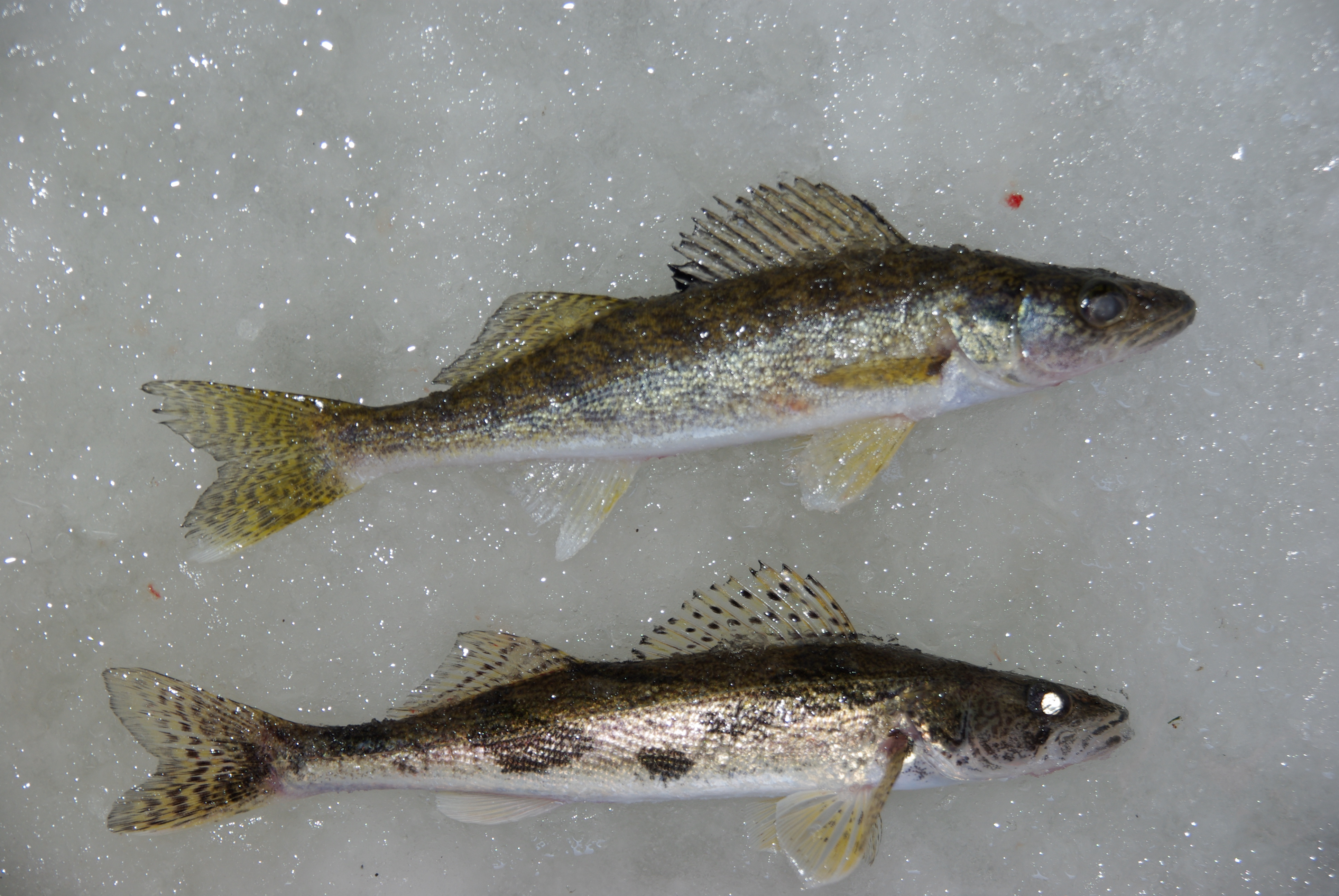
(Photo of a Sauger (black spots) and a Walleye.)
There’s no shortage of Walleye in the 1-3 pound range in the Ottawa, with plenty of examples of walleye in the 6-8 pound range being caught each winter. Sauger, a close but slightly smaller black-spotted relative of the Walleye are also in plentiful supply, as are Perch and Ling. Large Pike can also be caught, but these, like the larger Walleye, are generally caught on top of the shoals in 6-8 feet of water. Sturgeon can also be frequent visitors to the under-side of the ice fishing hole, as well as Musky, but regulations dictate both be quickly released.
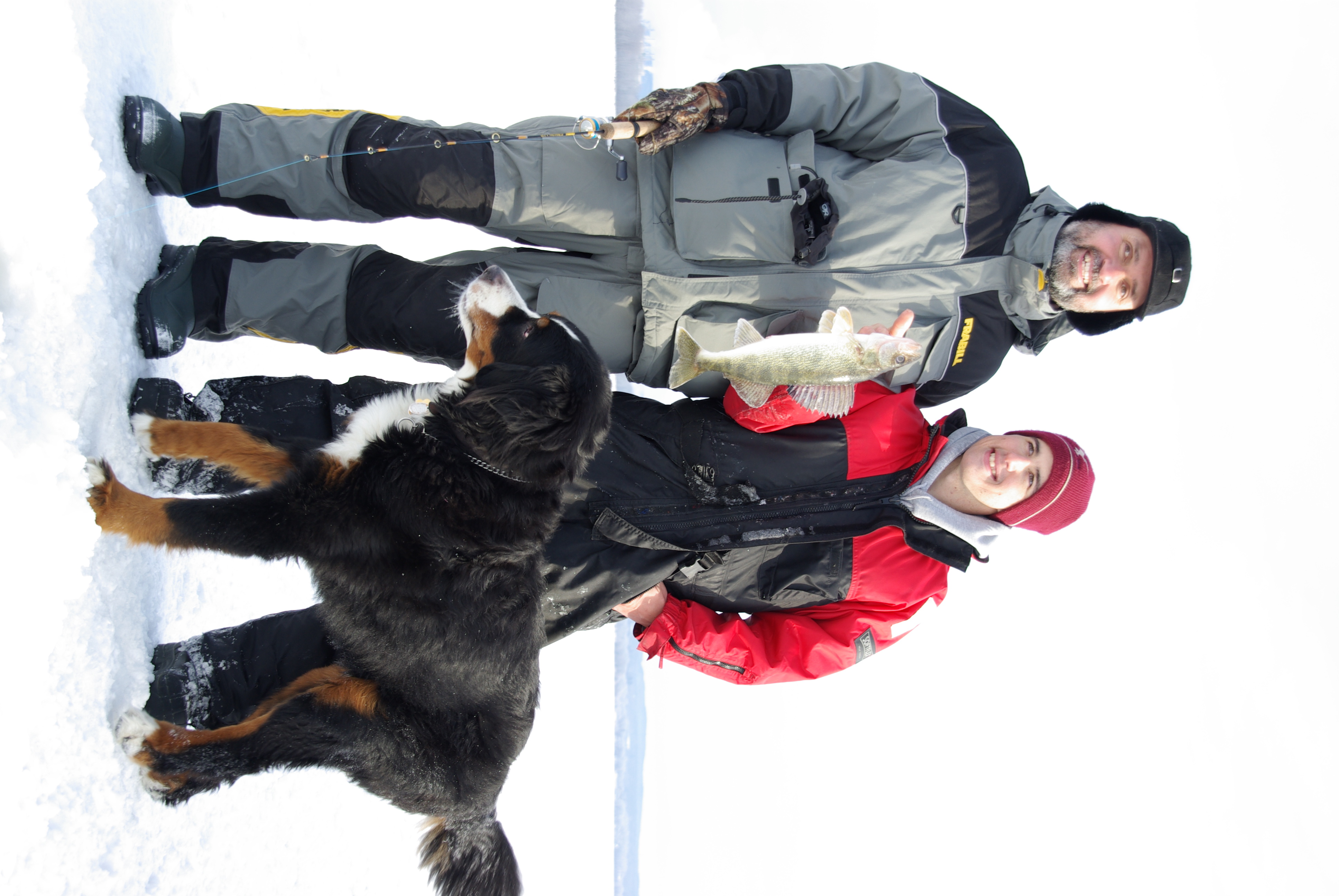
(Photo of Lawrence and Yannick Loranger holding a 2.5lb Walleye.)
One of my favourite rigs for dead sticking for Walleye and Sauger through the ice is drop-shotting. My rig includes a #2 J-hook about 6”-8” above a weight ranging in size from ½ to 2 oz depending on current speed. An excellent rig for larger Pike and Walleye (known to cruise higher in the water column) uses a Lindy Viking spoon with the hook removed and a length of 6” heavier leader material inserted between the spoon and a #1 long shank J-hook. Rigged with a 4” to 8” minnow hooked just behind the Dorsal fin and let sit.
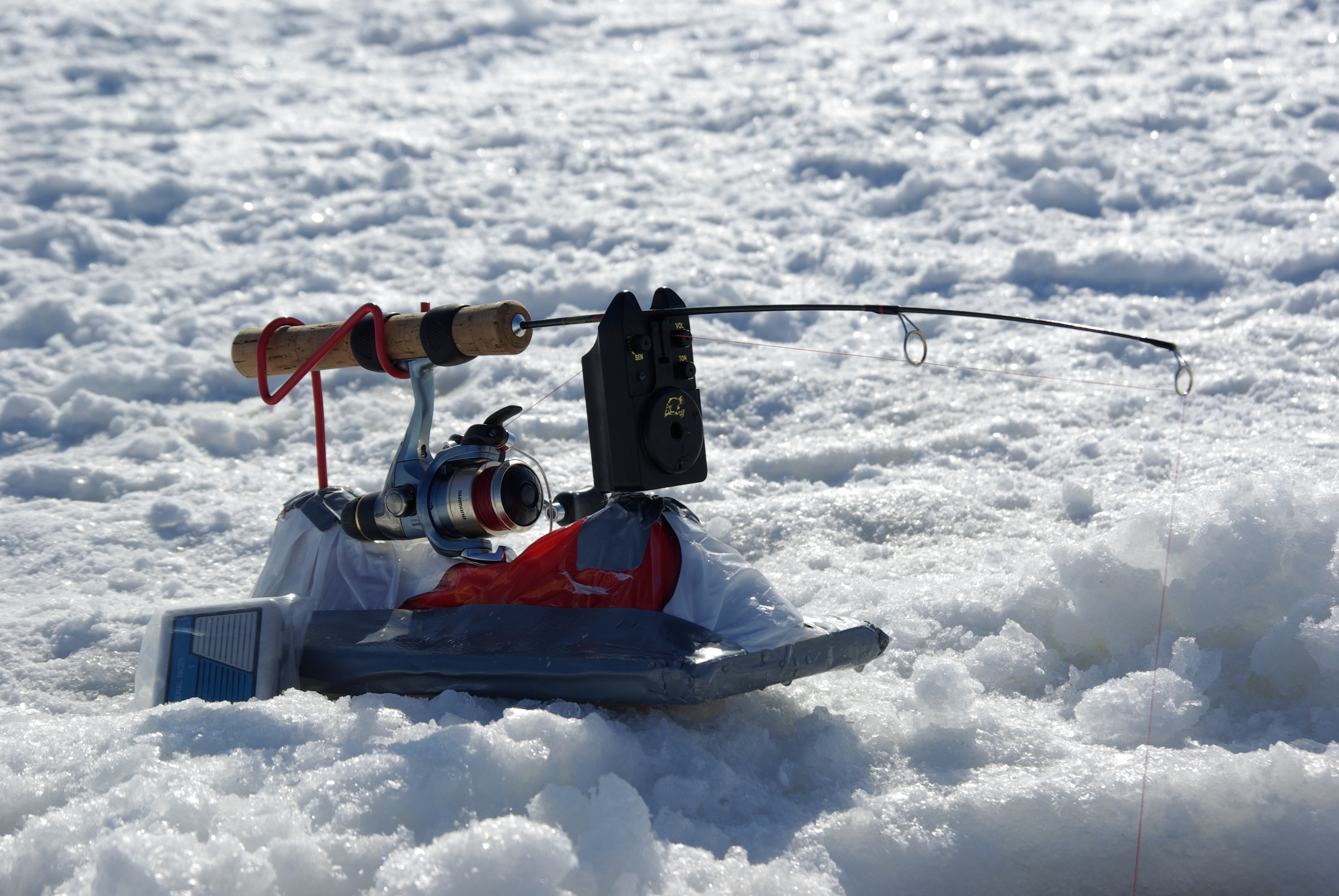
(Photo of Lawrence’s ice fishing dead-stick rig with the audible alarm.)
Everyone differs on their preferred method for setting up dead-stick presentations. My own invention employs a wire rod holder, a medium / heavy action ice fishing rod equipped with a Shimano Spirex reel, and an audible bite alarm. (Audible bite alarms are popular among Carp fishers.) I prefer Power Pro Ice braid for jigging and dead-sticking, with a swivel and fluoro leader. The Spirex’s Fight’n drag feature allows me to back off the drag almost completely while the rod rests in the holder, and then quickly reapply drag with a single twist of the wrist when the alarm sounds.
It’s often the case sonar will mark curious fish moving in to examine an actively jigged presentation, but then elect instead to take the near-by dead-stick bait. Actively jigging becomes more a case of “ringing the dinner bell” with dead sticking serving up the buffet. However, sonar can be highly effective at teasing fish into striking, turning ice fishing into more of a highly entertaining “cat and mouse” video game.
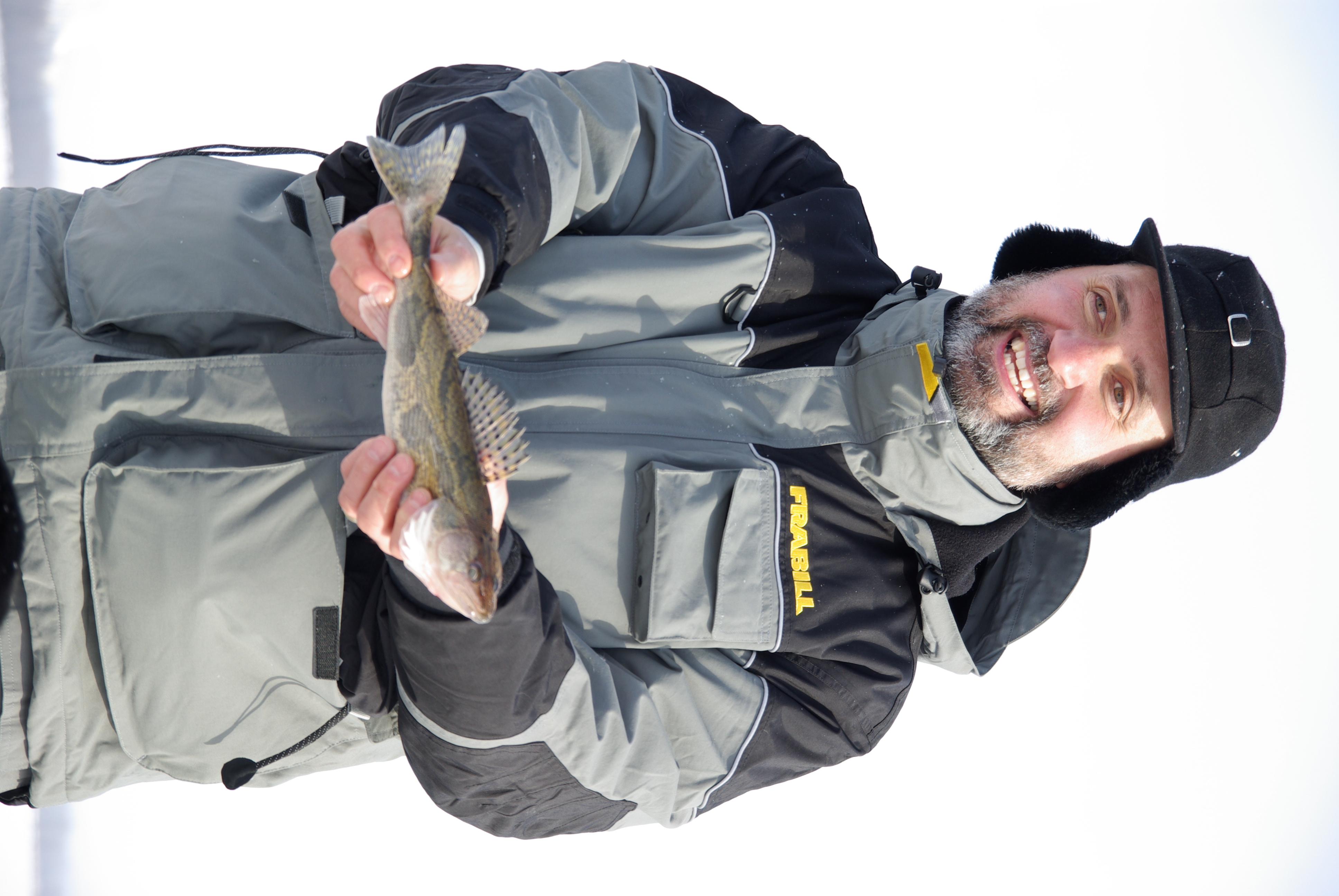
(Photo of Lawrence holding a 17” Sauger.)
Our day on the near-frozen Ottawa River was productive with many decent sized Sauger and several Walleye being caught and released. With the temperature hovering around 0 degree F, our portable Shelters remained stowed to facilitate access to each of our secondary dead-stick set-ups.
Without doubt, ice fishing is growing in popularity. No longer is it perceived as an excuse for a bunch of guys to get away, drink beer and harvest fish for the freezer. Permanent wooden ice huts are quickly becoming “old school”, with fishers adopting more of a “run and gun” approach to covering ice. Today’s light-weight portable equipment also means more choice when selecting the next destination.
The next time you’re in Ottawa for business or visiting with the family, take an extra day and give the Ottawa River a try. Or, book an adventure with one of our local guides. Be prepared to be blown away by the river’s size, beauty, and abundance and variety of fish. Oh yes, keep an eye out for wildlife such as this Coyote caught digitally by my buddy Scott as it crossed a frozen section of the river during our January outing.
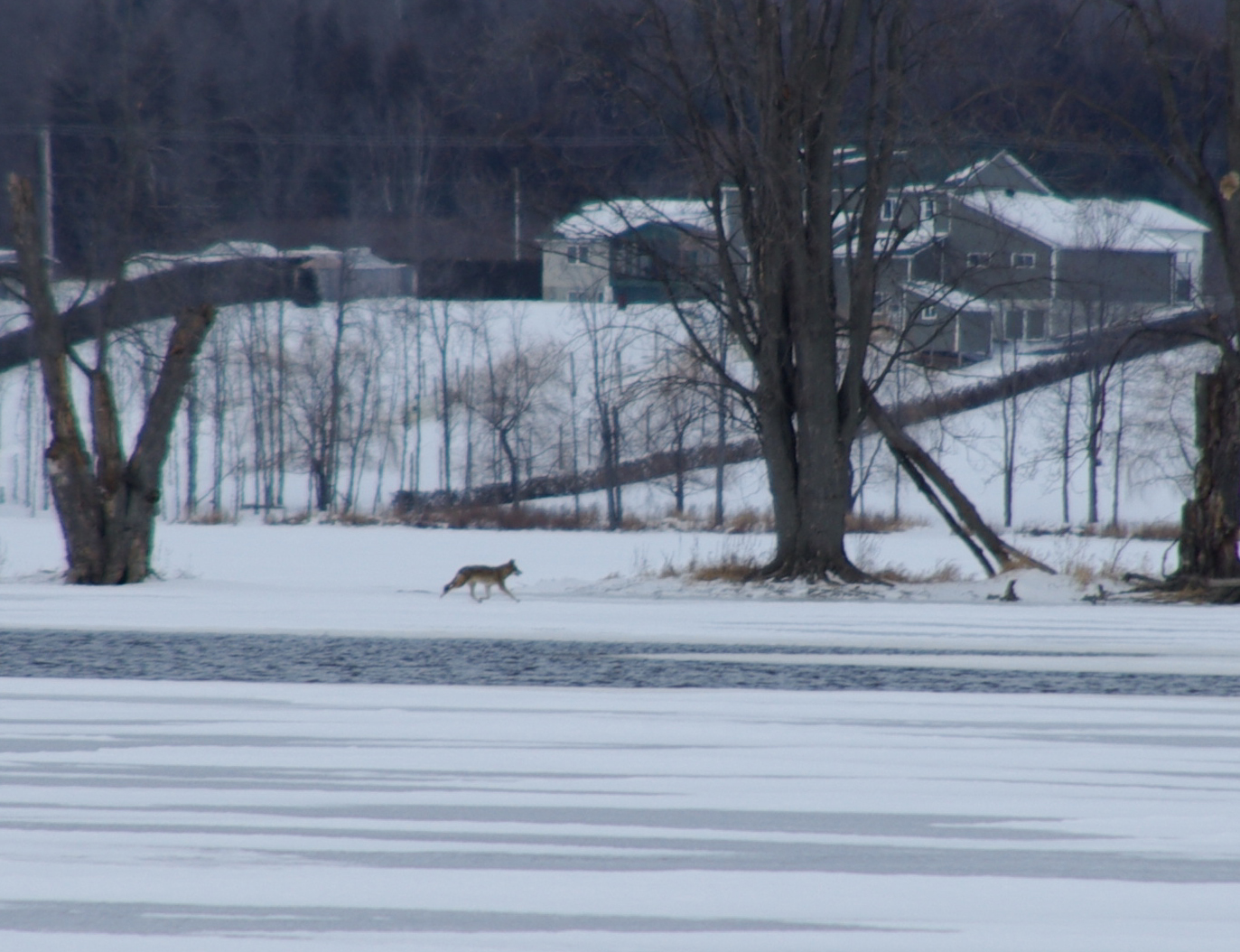
(Photo of a Coyote on the near-frozen Ottawa River.)


Author: | Posted on 12. March 2012 at 10:26 am | Filed in Blind Fishing Adventures, Feel The Bite, Fishing Tips | 0 Comments


